
BUSINESS
Universities Face a $70,000 Bill for Each OPT Nod
Homeland Security wants universities to pay $70,000 before recommending Optional Practical Training.

The Department of Homeland Security proposed that U.S. schools pay $70,000 before they can recommend an international student for Optional Practical Training. A later recommendation, including a STEM extension, would cost $30,000 more. The money would go to the Treasury, not to the campus and not to ICE, and the rule is not in effect.
Wire accounts framed a $70,000 student training bill. The notice of proposed rulemaking names a different payer: the SEVP-certified school that clicks the recommendation in SEVIS.
Schools Get the Invoice Before a Student Can Work
DHS posted new fees for F-1 Optional Practical Training on October 7, 2026, with Federal Register publication on October 8. Under the draft, a designated school official cannot enter an OPT recommendation until the school’s payment is verified. U.S. Citizenship and Immigration Services would refuse the work card if that payment is missing.
The fee is not tied to a named employer. It attaches when the school recommends any form of OPT: pre-completion, post-completion, or a later STEM stretch. Changing jobs would not trigger another $30,000 charge. A school could seek a refund only before the employment card is issued; after that, the draft bars a refund and an administrative appeal.
Students still file Form I-765 at $470 online or $520 on paper. Those are the only OPT filing charges in force. Eligible F-1 students may take up to 12 months of OPT at each education level, and STEM graduates may add a 24-month extension, for as much as 36 months of work tied to the degree.
HOW THE PAYMENT GATE WOULD WORK
- School pays first: The SEVP-certified institution remits $70,000 for a student’s first OPT recommendation, then $30,000 for each later one.
- SEVIS stays locked: A designated school official cannot enter the recommendation until the fee is paid and verified.
- USCIS follows the receipt: The agency would not grant employment authorization if the school has not paid.
- Treasury takes the cash: ICE would not keep or spend the money, because the statute gives it no authority to retain it.
A DHS spokesperson called OPT a pipeline that American workers should not have to compete against, and said the department is “upskilling OPT to require foreign students to justify their worth to employers.”
Optional Practical Training was never meant to be a back door into the American workforce, a subsidy for cheap labor, or a prize for those who game the system.
DHS Spokesperson, October 7, 2026 department statement
SEVP, the Student and Exchange Visitor Program, cited “pay-to-stay” schemes, weak worksites, and schools, officials, employers, and students exploiting current rules. DHS says a large bill would force campuses to be choosier about whom they recommend. It also says the $70,000 figure was set to sit close to H-1B charges so students and employers would stop using OPT to slip around that system.
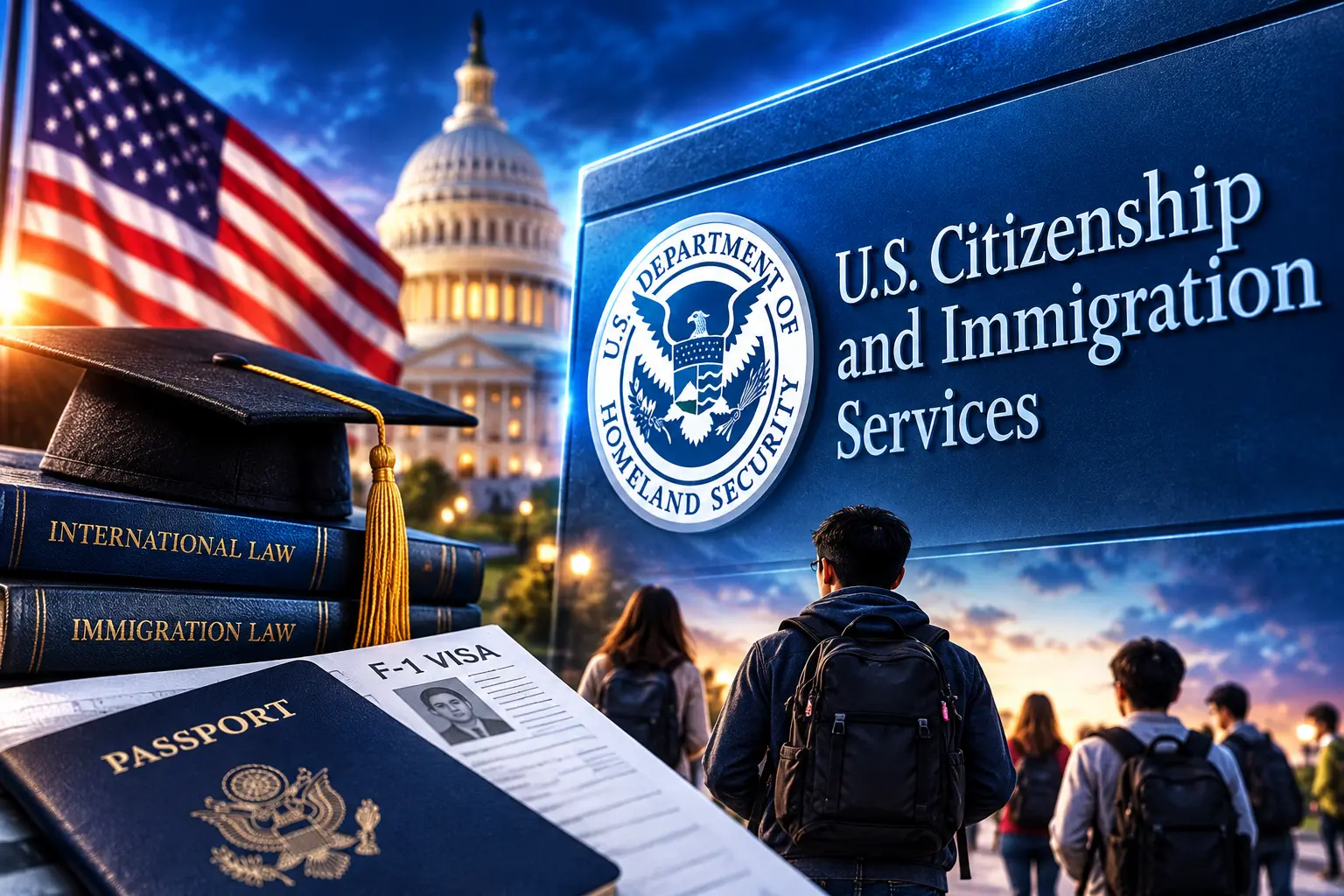
DHS Projects $8.4 Billion to $16.5 Billion a Year
The NPRM is candid about where the money would sit. Fees would be deposited in the Treasury of the United States as a miscellaneous receipt under 31 U.S.C. 3302. ICE “would not maintain or use the funding,” the draft says, because the statute does not let it keep the collections. Congress could later appropriate the cash. Until then, the fee’s job is to deter, not to staff more site visits.
That design is why Doug Rand, director of the Talent Mobility Fund and a former USCIS adviser, called the proposal an unlawful tax. He noted that DHS claims it lacks fraud-fighting resources, then admits not a penny of these fees would go to fraud prevention. “This proposed rule isn’t going to fare well in the courts, just as the 100k H-1B fee and other restrictionist policies have been struck down,” he wrote on LinkedIn on October 7, 2026.
DHS modeled the take off two 2024 snapshots, which are recommendation counts in its fee table, not the Open Doors headcount.
DHS ANNUAL FEE MODEL, 2024 SNAPSHOTS
| Scenario | Initial OPT students | Fees at $70,000 | STEM OPT students | Fees at $30,000 | Total |
|---|---|---|---|---|---|
| High | 194,554 | $13.6 billion | 95,384 | $2.9 billion | $16.5 billion |
| Low | 88,374 | $6.2 billion | 74,088 | $2.2 billion | $8.4 billion |
DHS estimates that 56 percent of SEVP-certified schools are small entities, and it rejected a small-school exemption on the ground that those campuses are part of the fraud risk. A school that recommended 100 first-time OPT students would owe $7,000,000 before anyone started work. DHS says schools may “mitigate their budgetary impact” by passing the bill to F-1 students, to all students, or to employers, and it notes that a DSO is not required to recommend OPT at all.
Nearly Half of OPT Comes From India
The Open Doors 2025 census, from the Institute of International Education, counted 1,177,766 international students in 2024/25, up 4.5 percent from 1,126,690. It also counted 294,253 students on Optional Practical Training, up 21.2 percent, the fastest-growing slice of that census. More than half of international students, 57 percent, were in STEM fields.
India was the top source country, with 363,019 students, 30.8 percent of the total. China followed with 265,919, or 22.6 percent. Together they were 53 percent of all international students. Open Doors’ India fact sheet put 143,740 Indian students on OPT, about 49 percent of the OPT total, after a 47.3 percent jump from 97,556.
OPEN DOORS 2024/25 COUNTS
| Group | Headcount | Share |
|---|---|---|
| All international students | 1,177,766 | 100 percent |
| From India | 363,019 | 30.8 percent of all |
| From China | 265,919 | 22.6 percent of all |
| All OPT | 294,253 | 21.2 percent above 2023/24 |
| India on OPT | 143,740 | about 49 percent of OPT |
New international enrollment already fell 7.2 percent, to 277,118, in 2024/25, and graduate enrollment slipped 2.7 percent to 488,481. The Center for Immigration Studies, using State Department figures for the May-August peak, said F-1 visas issued to Indian nationals dropped to 22,149 in 2025 from 58,694 in 2024, a 62 percent decline, while visas to Chinese nationals fell 34 percent, to 40,034 from 61,075. The OPT fee would land on a pipeline that is already thinner at the visa window.
What Happens If Campuses Pass the Fee Along?
The draft does not tell schools how to raise the cash, so long as they obey other law, including foreign-gift reporting. DHS writes that passing the fee to F-1 students or employers “would further discourage misuse” by people whose real aim is work or residence, and by firms that displace U.S. workers. It even argues the $70,000 is “on par with the educational costs that foreign students incur for one or two years of education” in the United States.
A master’s student who already paid tuition would then face a second, larger check for the right to work in the field the degree taught. An employer that wanted the graduate could write the check instead. A campus that absorbed it would be subsidizing a job at a company it does not control. The practical reading, and the one that kept coming back while this proposal was still in White House review, is that many schools will not pay for “some random employer” and will simply stop recommending OPT.
That is the hidden lever. Students and tech firms feel the labor-market hit. The named debtor is the registrar’s office. A large STEM master’s program that recommended hundreds of OPT cases would be looking at tens of millions of dollars, or at a quiet policy of no recommendations. Either path strips the American degree of the work bridge that has sold it, especially in India.
WHERE EXPERTS DISAGREE
- DHS: OPT has been turned into cheap-labor access and a way around H-1B caps, fees, and wage rules, and a large prepaid fee is the fastest integrity fix.
- Fanta Aw, NAFSA: International students fill STEM shortages and generate jobs for U.S. workers, and the fee will hurt American innovation and economic growth.
- Doug Rand: Because ICE cannot keep the money, the charge is a tax dressed as a program fee, and courts will treat it that way.
Aw, executive director and CEO of NAFSA: Association of International Educators, said the fee is the latest move that “creates deep uncertainty for international students,” and that her members will file detailed comments. Restrictionist critics have wanted OPT ended, not repriced, on the ground that graduation should close the student-work path. The NPRM does not terminate OPT. It prices the recommendation at a level DHS expects will shrink it.
Trump Once Promised a Green Card With the Diploma
On the All-In podcast released June 20, 2024, Donald Trump told a room of tech investors he wanted foreign graduates to stay. He had been asked to promise more room to bring in “the best and brightest.”
You graduate from a college, I think you should get automatically, as part of your diploma, a green card to be able to stay in this country, and that includes junior colleges.
Donald Trump, All-In podcast, June 20, 2024
Hours later, campaign press secretary Karoline Leavitt narrowed the line. Graduates would face “the most aggressive vetting process in U.S. history,” she said, to exclude “communists, radical Islamists, Hamas supporters, America haters and public charges,” and only “the most skilled graduates who can make significant contributions to America” would stay, and only if they “would never undercut American wages or workers.”
A green card is permanent residence. OPT is a temporary work card that has, for years, been the bridge from an F-1 visa to an H-1B petition. The proposed school fee does not staple a green card to anything. It asks the university to put $70,000, and another $30,000 for STEM time, on the table before that bridge can open. Combined, initial OPT plus one later recommendation is $100,000, the same round number the White House tried to hang on new H-1B entries.
The $100,000 H-1B Fee Is Already Off the Books
DHS wrote the OPT price to “closely align” with H-1B fees. That sister charge has spent 2026 in court, not in cash registers, which is the preview Rand is pointing at.
THE H-1B $100,000 FEE IN COURT
- September 19, 2025: President Trump issues Proclamation 10973, a $100,000 payment on certain new H-1B petitions.
- June 2026: U.S. District Judge Leo Sorokin in Boston vacates the implementing policy in a suit by 20 states, finding an unauthorized tax and an Administrative Procedure Act violation.
- July 2026: The First Circuit declines to pause that ruling, so the fee stays out of force.
- September 18, 2026: A new proclamation extends the $100,000 charge.
- September 30, 2026: U.S. District Judge Haywood S. Gilliam Jr. in the Northern District of California, in Global Nurse Force v. Trump, vacates the agency policies again and bars enforcement until notice-and-comment rulemaking and small-business analyses are done.
The OPT proposal is already in notice-and-comment form, which is the step the H-1B proclamations skipped. That does not end the legal fight. Rand’s tax point still sits in the NPRM itself: ICE cannot retain the funds, and the collections are not earmarked for SEVP. Challengers will also test whether $70,000 is a fee for a service or a penalty meant to shut the program. DHS says it considered extending STEM-style site visits and training plans to all OPT, then chose a fee because it could be imposed “quickly and uniformly” without new enforcement staff.
Comments Run Through November 9
DHS is taking comments on the rule from October 8 through November 9, 2026, through Regulations.gov on docket ICEB-2026-0100. A separate Paperwork Reduction Act clock runs 60 days. After the comment period, the department said it will read submissions and may revise the text. If it issues a final rule, it proposes a 60-day delay before the fee applies, and only to recommendations made on or after that effective date.
Until a final rule is published, schools should keep recommending OPT under the current I-765 fees. NAFSA has already promised a comment dump. Universities that live on international master’s tuition have the most to explain, because they are the ones who would have to write the checks, raise the price, or walk away from the work authorization that has been part of the degree’s pitch.
The draft leaves that choice on the campus desk, with the Treasury as the only guaranteed recipient if anyone pays.
Disclaimer: This article is news reporting and analysis of a proposed immigration rule. It is for information only and is not legal advice, visa advice, or guidance on any student’s, school’s, or employer’s filing. Readers who may be affected should consult a licensed U.S. immigration attorney or their designated school official before changing applications, payments, or enrollment plans. Fee amounts, comment dates, and effective dates are those in the Department of Homeland Security materials described here and can change if the rule is revised, withdrawn, or blocked in court.

The $2,599 Surface Laptop Ultra Hides a $5,900 Machine

Universities Face a $70,000 Bill for Each OPT Nod

Contactless eGates Let British Faces Open UK Borders

Securitize Joins LG CNS to Wire Korea’s Token Rails

Meta Wrapped Muse in a Toy and Handed It the Keys

Nvidia’s $3.5 Billion MediaTek Deal Keeps Custom Chips Close

Pittsburgh Keeps Four Quarterbacks and Still Lacks a Successor

Pelacarsen Miss Hands the Lp(a) Bet to Amgen

Tony Romo’s OWI Plea Follows Him Into Every Car

Shopify’s AI Push Pays Off Through Payments Mix
-
 NEWS1 month ago
Nvidia’s $3.5 Billion MediaTek Deal Keeps Custom Chips Close
-
 NEWS1 month ago
Pittsburgh Keeps Four Quarterbacks and Still Lacks a Successor
-
 NEWS1 month ago
Pelacarsen Miss Hands the Lp(a) Bet to Amgen
-
 NEWS1 month ago
Tony Romo’s OWI Plea Follows Him Into Every Car
-
 NEWS1 month ago
Shopify’s AI Push Pays Off Through Payments Mix
-

 NEWS1 month ago
POET Takes CPO Lasers to Shenzhen’s Optics Floor
-

 NEWS1 month ago
Australia’s Feed Prompts Leave the Algorithm Switched On
-
 NEWS1 month ago
Health-ISAC Warns ShinyHunters Is Walking Through Hospital Logins